An image of Claudio Pellegrini beside a schematic showing magnets in orange and an electron beam in green creating a blue beam of X-rays.
May 23, 2025

Symposium celebrates Claudio Pellegrini, pioneer of SLAC’s X-ray laser

Leading researchers met at SLAC on Pellegrini’s 90th birthday to honor his ongoing scientific legacy and to explore the future of X-ray free-electron laser science.

By Manuel Gnida

Linac Coherent Light Source

The Linac Coherent Light Source at SLAC, the world’s first hard X-ray free-electron laser, takes X-ray snapshots of atoms and molecules at work, revealing fundamental processes in materials, technology and living things.
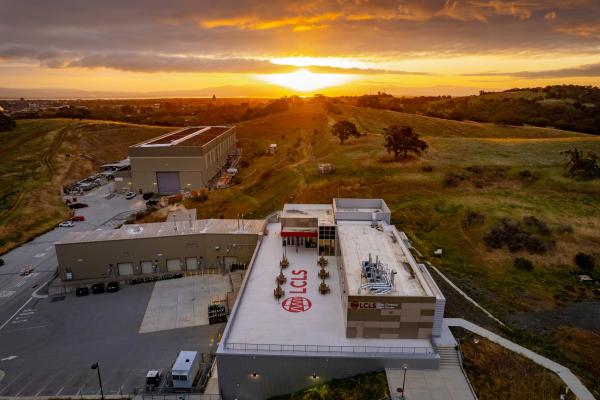
SLAC’s Linac Coherent Light Source (LCLS) Near Experimental Hall building at sunrise with Stanford University Hoover Tower in the background.

Ask anyone about Claudio Pellegrini – distinguished professor emeritus of physics at the University of California, Los Angeles, and adjunct professor of photon science at the Department of Energy’s SLAC National Accelerator Laboratory – and they are quick to share their heartfelt admiration. They describe a gentle giant, widely regarded for his influential work and noble character; a charismatic and curious leader who ushered in a whole new way of doing science; a mentor, friend and someone who has become a father or grandfather figure to many in the accelerator and free-electron laser science community.

On May 9, 2025, on Pellegrini’s 90th birthday, SLAC hosted a special symposium to honor his ongoing scientific legacy. 

Among Pellegrini’s many accomplishments, one moment in time stands out. At a workshop on fourth generation light sources in 1992, he proposed to use SLAC’s historic linear accelerator to build an X-ray free-electron laser. That visionary idea became reality in 2009 when SLAC turned on its Linac Coherent Lightsource (LCLS), the world’s first free-electron laser producing “hard,” or very high-energy, X-rays.

Click through the photo carousel to learn more about the development of the LCLS idea, Pellegrini’s contributions, and what his colleagues had to say about his legacy at the May 9 symposium.
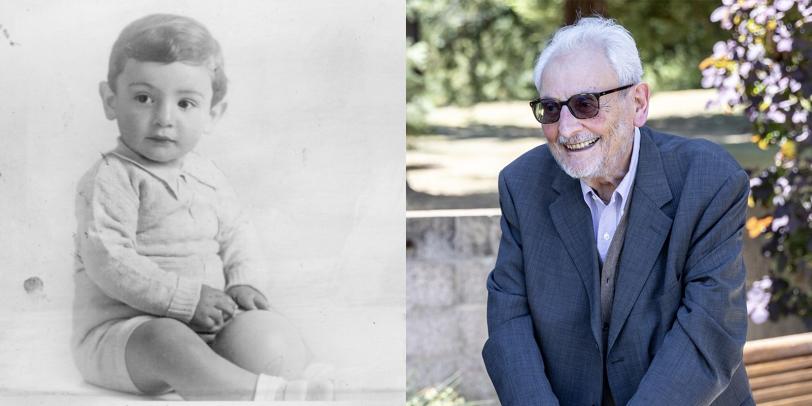
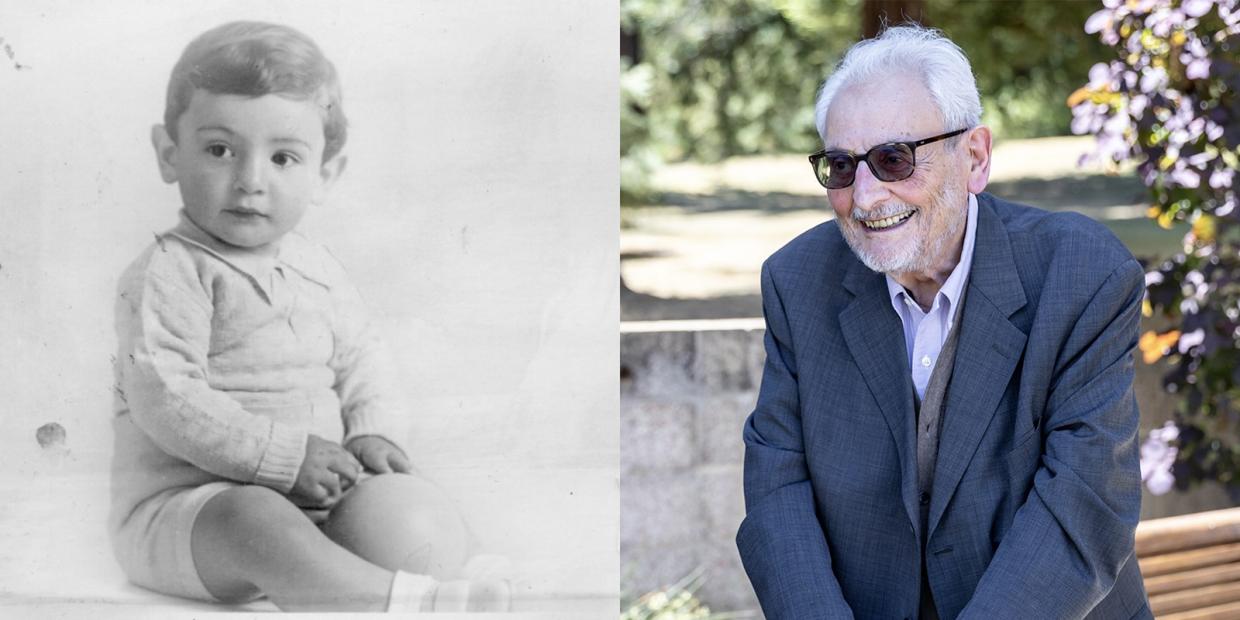
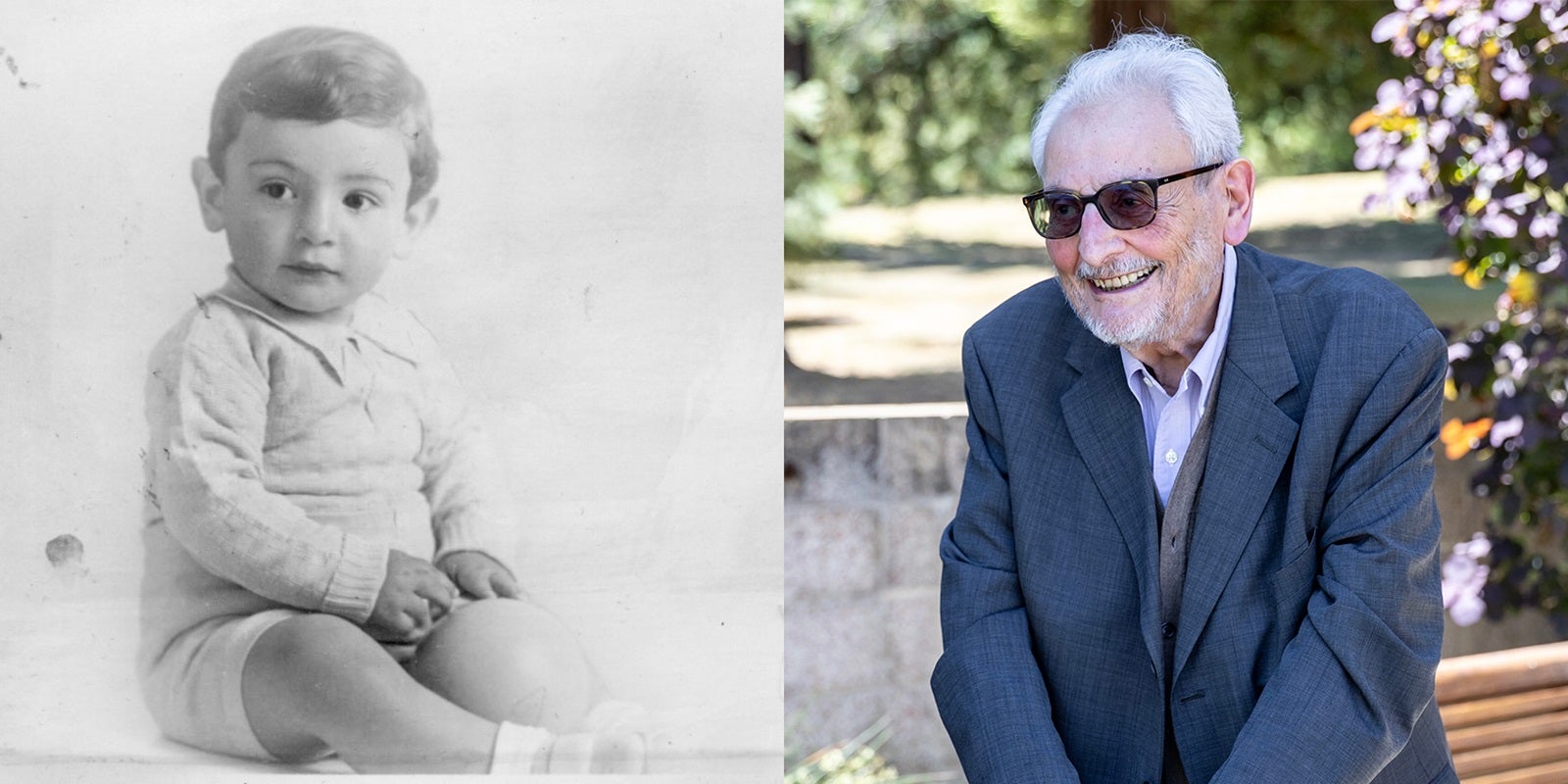
A baby picture and a current picture of Claudio Pellegrini.
Claudio Pellegrini, inventor of SLAC’s X-ray free-electron laser, as a 1-year-old and on his 90th birthday at a SLAC symposium in his honor.  Pellegrini received his academic education at Sapienza University of Rome, Italy. From 1958 to 1978, he worked at the Italian National Laboratory of Frascati. He then moved to DOE’s Brookhaven National Laboratory to become associate chairman of the National Synchrotron Light Source (NSLS) and co-director at the Center for Accelerator Physics. In 1989, he became a professor of physics at UCLA. He is currently a distinguished professor emeritus of physics at UCLA and adjunct professor of photon science at SLAC. Pellegrini is a Fellow of the American Physical Society and a member of the National Academy of Sciences. In 2001, he received the Robert R. Wilson Prize, and in 2014 the Enrico Fermi Award. (Left: courtesy of Claudio Pellegrini, Right: Jacqueline Ramseyer Orrell/SLAC National Accelerator Laboratory)
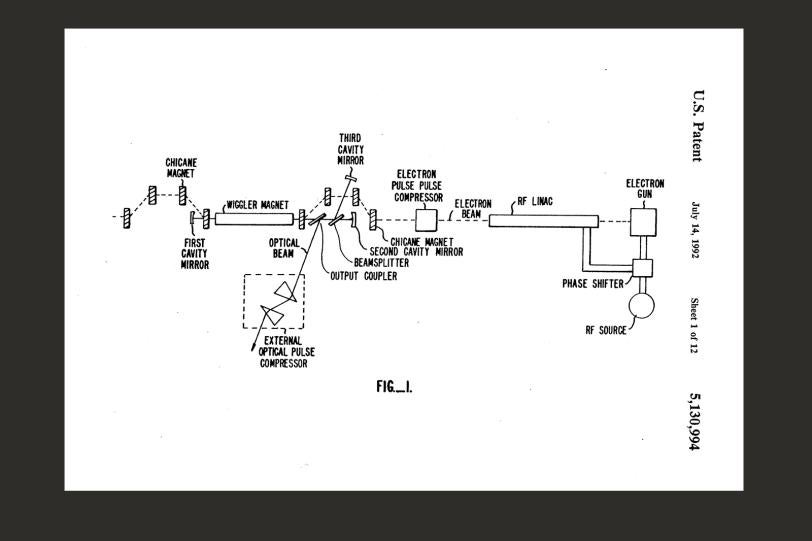
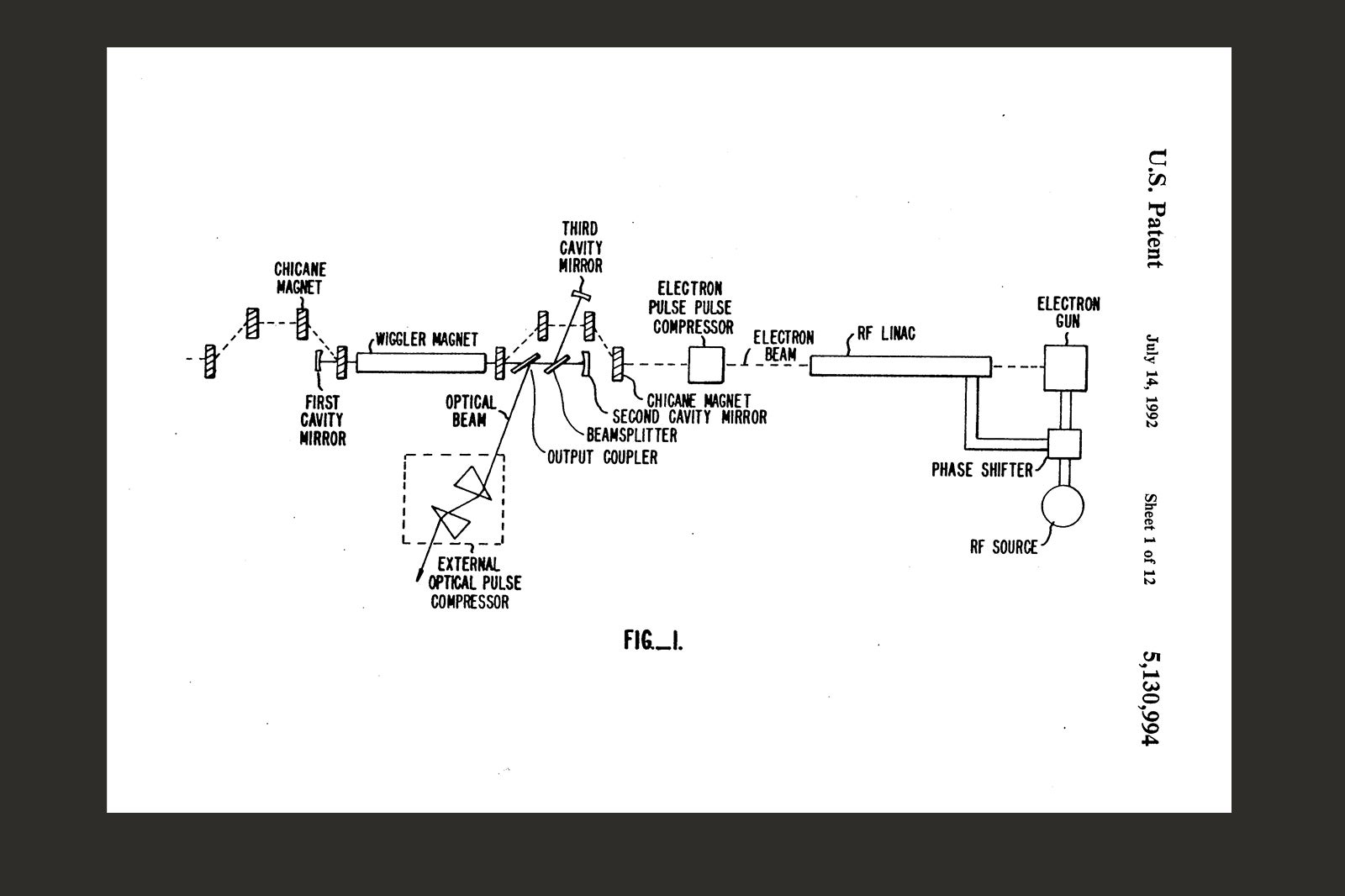
A basic schematic drawing of an X-ray Free Electron Laser.
In the early 1970s, John Madey at Stanford University invented a new type of light source, the free-electron laser (FEL). Unlike a regular laser, in which light gets amplified in a medium where it interacts with light emitted by electrons bound to atoms, amplification in an FEL happens through interaction with light emitted by a beam of “free,” or unbound, electrons. The schematic shown here is taken from Madey’s FEL patent, issued in 1992. It shows the three principal components of an FEL (from right): a source of electrons (electron gun), a linear accelerator (RF linac) that turns those electrons into an energized electron beam, and a magnetic structure (wiggler magnet), in which the FEL radiation is extracted from the electron beam. (US patent 5130994)
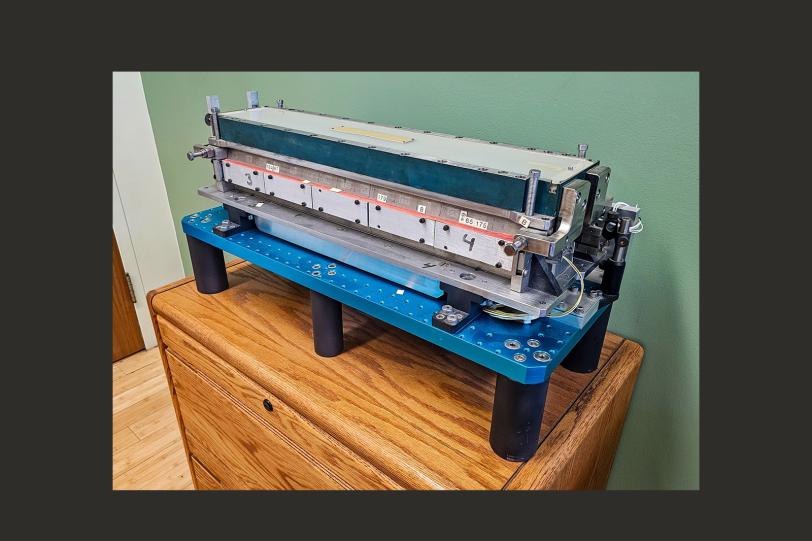
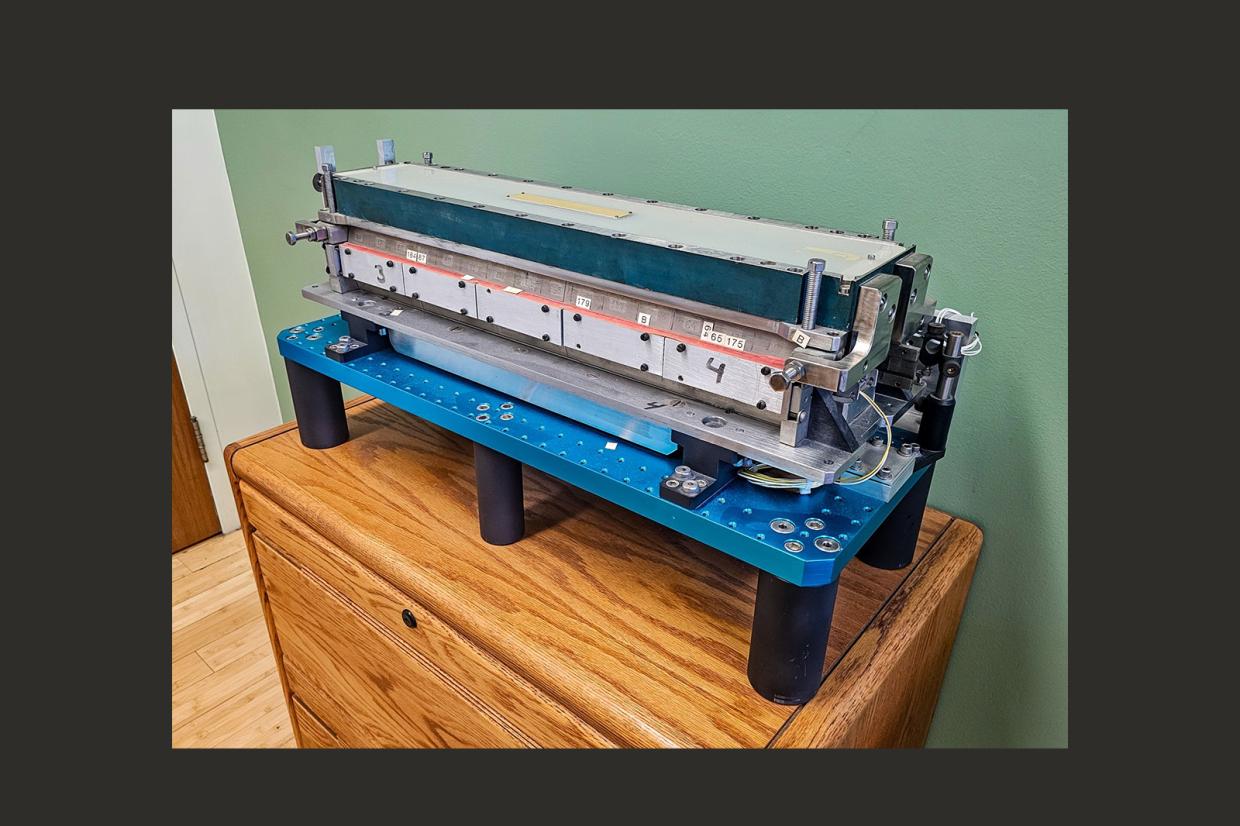
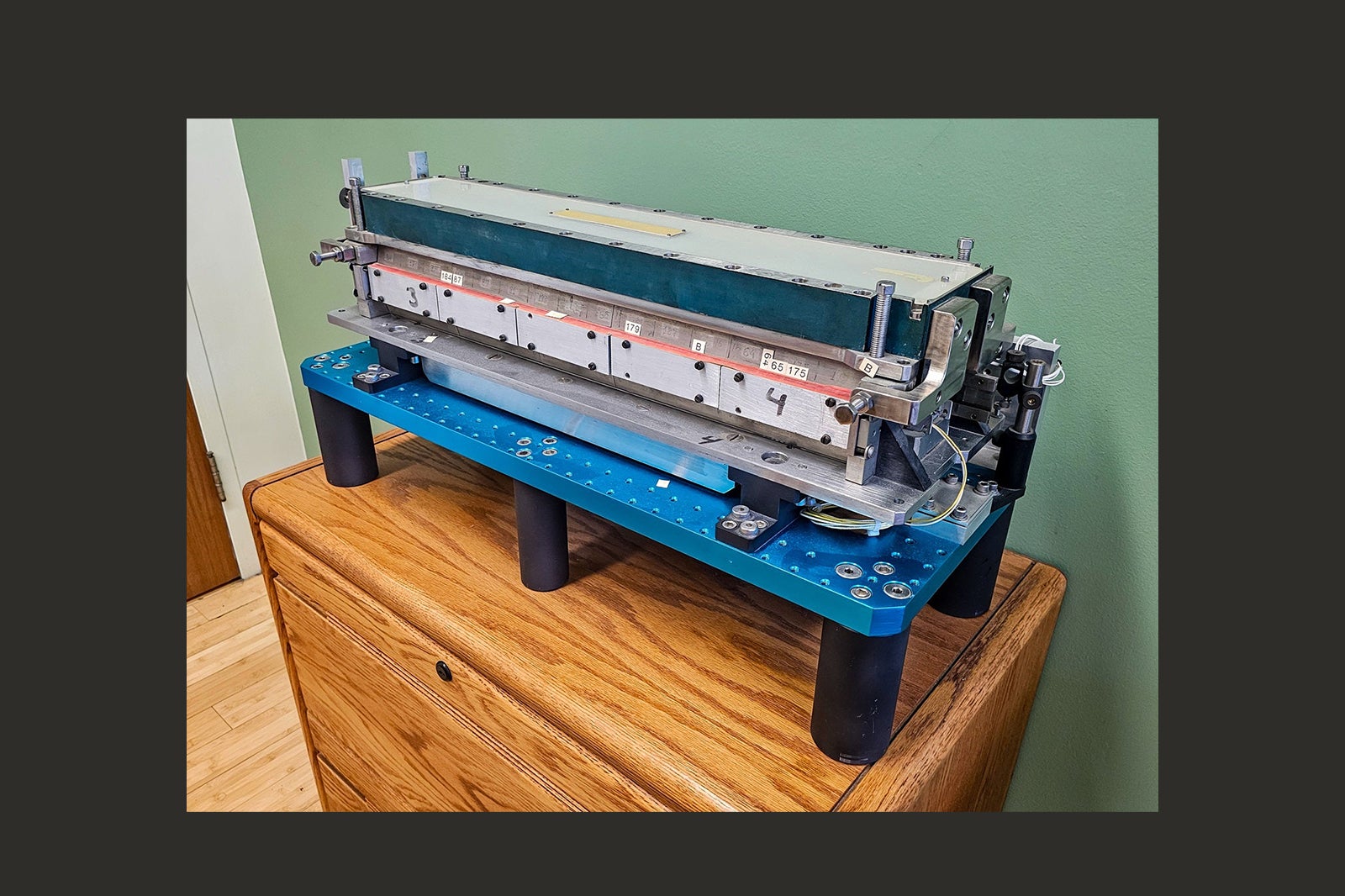
A blue and gray piece of lab equipment atop a wooden chest of drawers.
Madey’s FEL produced infrared light with small amplification (low gain). In 1984 Pellegrini, in a paper with Bonifacio and Narducci, extended the FEL theory and realized that, in principle, FELs can produce X-rays with high amplification (high gain), provided the quality of the electron beam is good enough. Other authors had also studied the high-gain regime in the late 1970s. In 1989, Pellegrini moved to UCLA. There, his team put together an FEL, using an electron gun and a small linear accelerator built at UCLA, and an undulator magnet, built by Alexander Varfolomeev at the Kurchatov Institute in Moscow. While still producing infrared radiation, the experiment was the first verification of the high-gain, wavelength-independent FEL theory. Subsequent UCLA-led experiments done at Los Alamos National Laboratory measured the very high gain needed to enable an FEL that produces “hard,” high-energy X-rays. This photo shows the 0.6-meter-long undulator used in the first UCLA experiment. It was a gift from Varfolomeev and is now on display in Pellegrini’s office at UCLA. (Pietro Musumeci/UCLA)
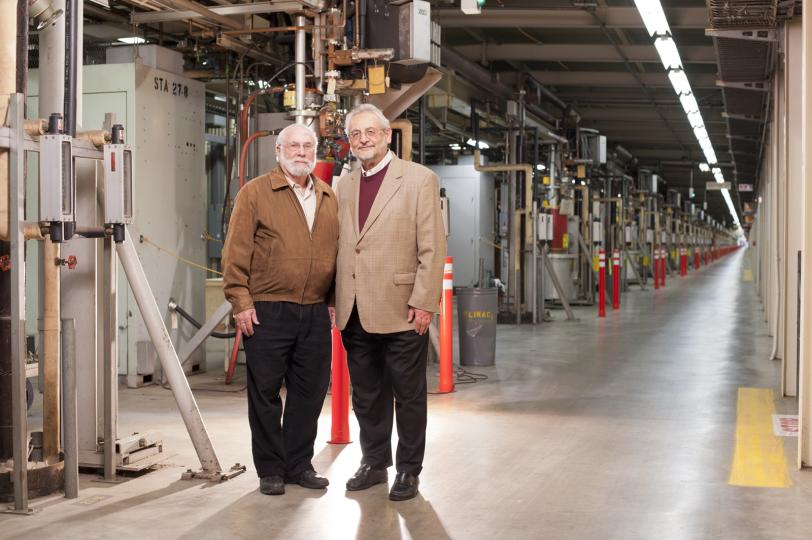
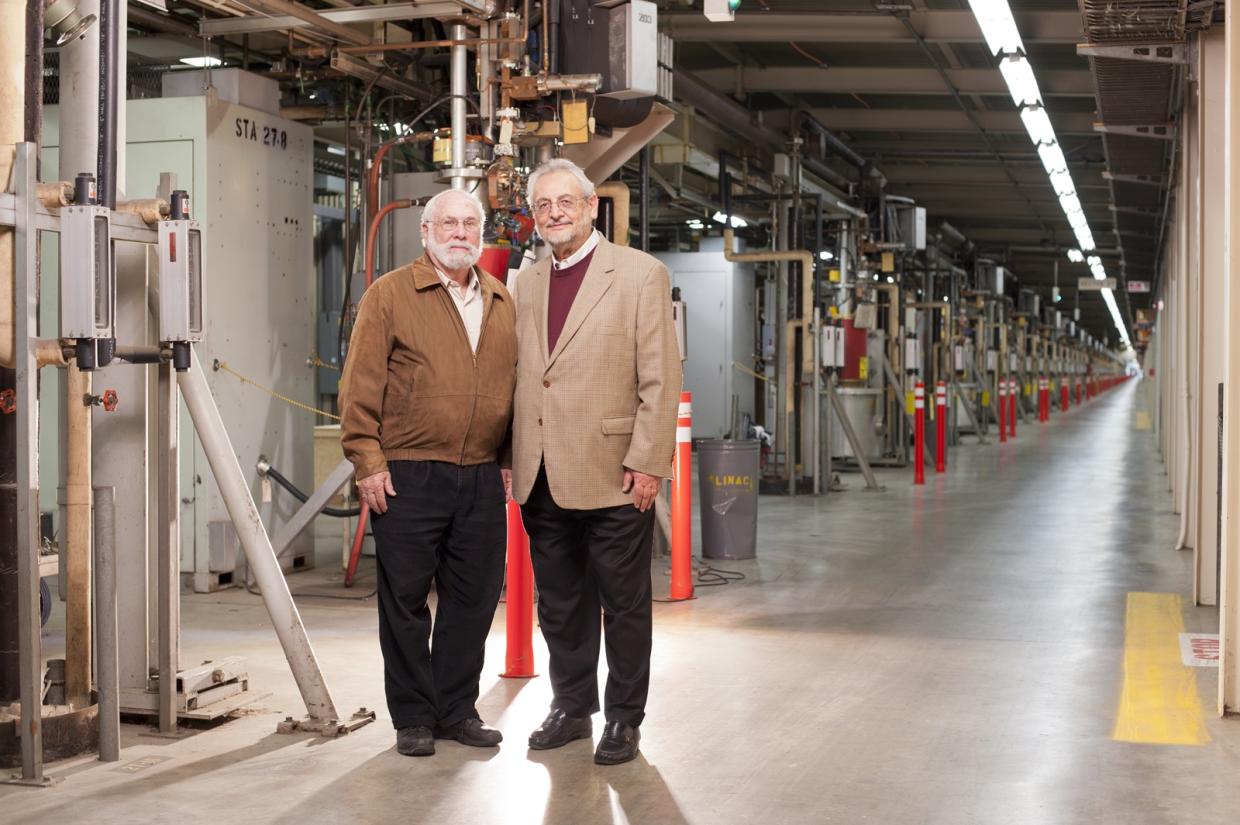
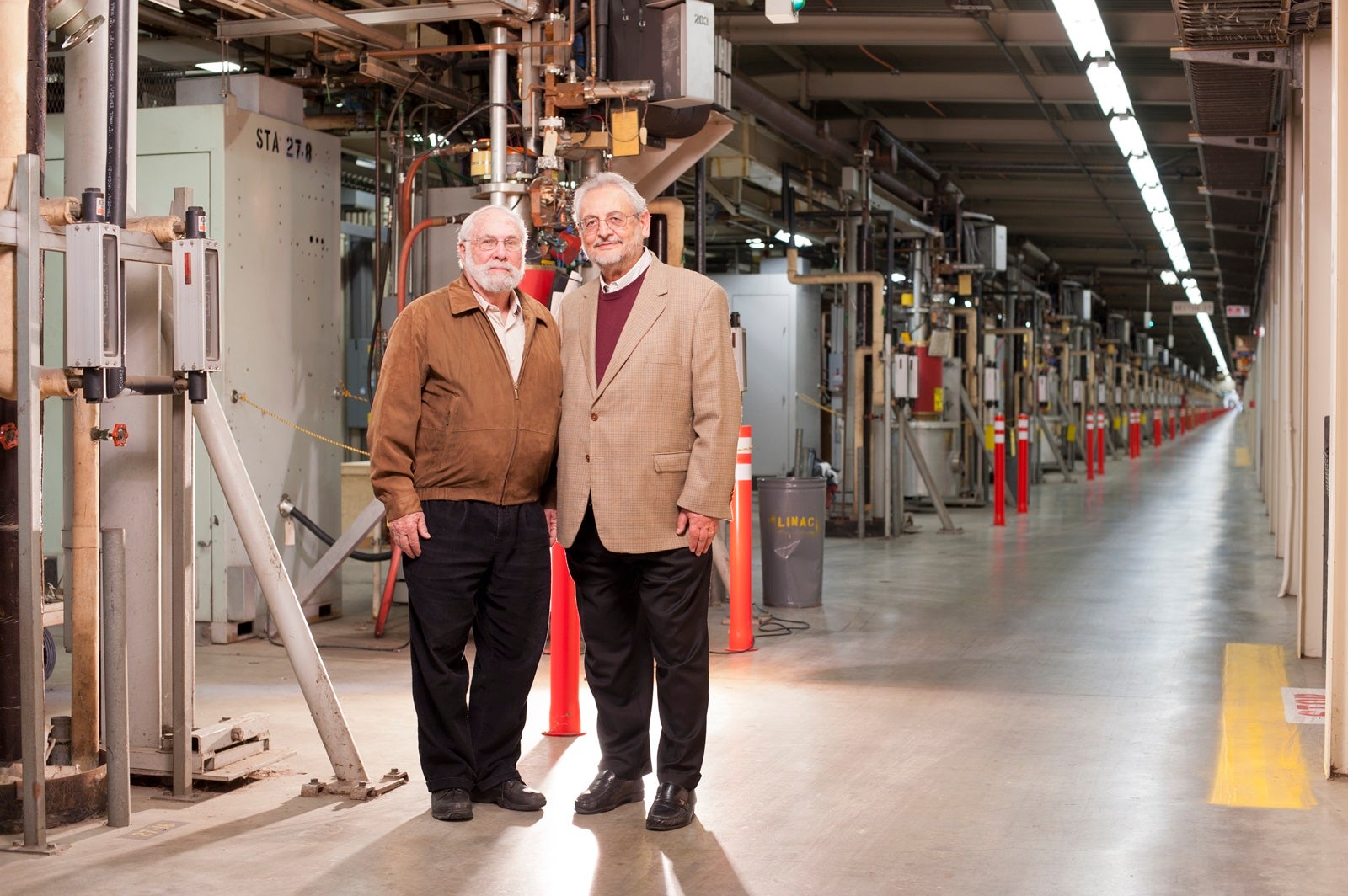
Claudio Pellegrini with SLAC and Stanford Professor Emeritus Herman Winick at LCLS.
In 1992, researchers met at SLAC at the Workshop on Fourth Generation Light Sources to discuss the future direction of the lab’s Stanford Synchrotron Radiation Lightsource (SSRL). While many of the attendees were in favor of continuing the current direction of the facility, which produces bright X-rays with a ring-shaped accelerator, Pellegrini proposed a different road. In his talk, he laid out his idea of turning SLAC’s linear accelerator (linac) into an X-ray free-electron laser (XFEL). Such a machine would take the electron beam from the linac and send it through a 100-meter-long undulator magnet. Pellegrini’s calculations showed that as the electrons are forced on a wiggly flight path through that undulator, they emit light that would interact with the electron beam in a specific way that would generate extremely powerful X-ray pulses at the undulator’s exit. This process of light production is called self-amplified spontaneous emission (SASE). This photo shows Pellegrini with SLAC and Stanford Professor Emeritus Herman Winick (left), who, together with Max Cornacchia, organized the 1992 workshop, at a celebration of the 20th anniversary of the meeting. (Matt Beardsley/SLAC National Accelerator Laboratory)
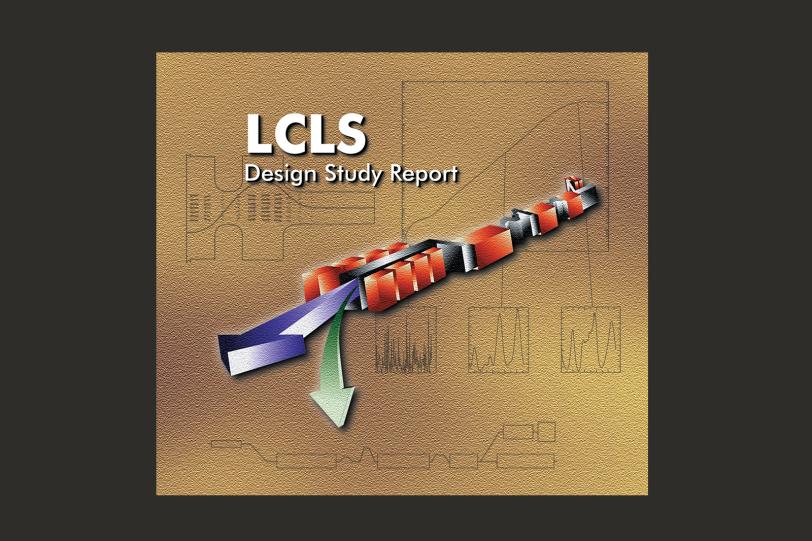
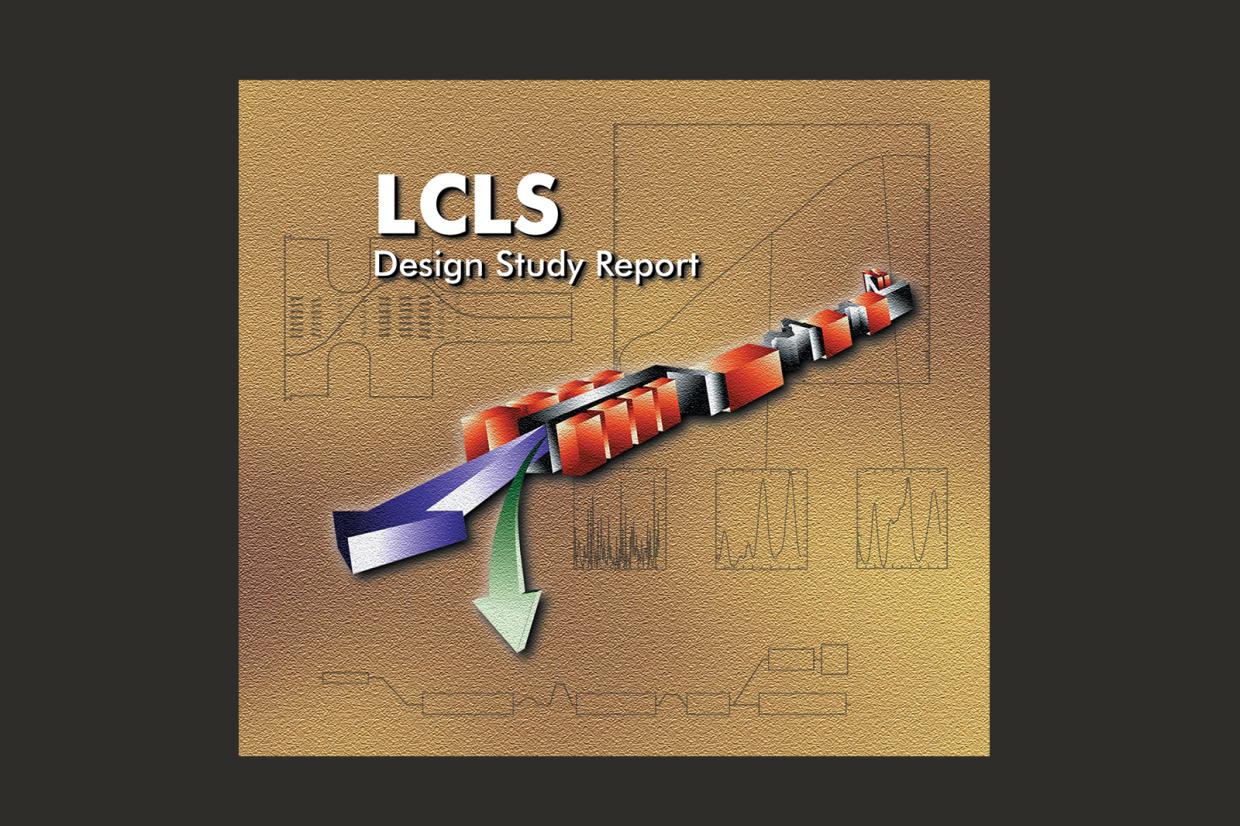
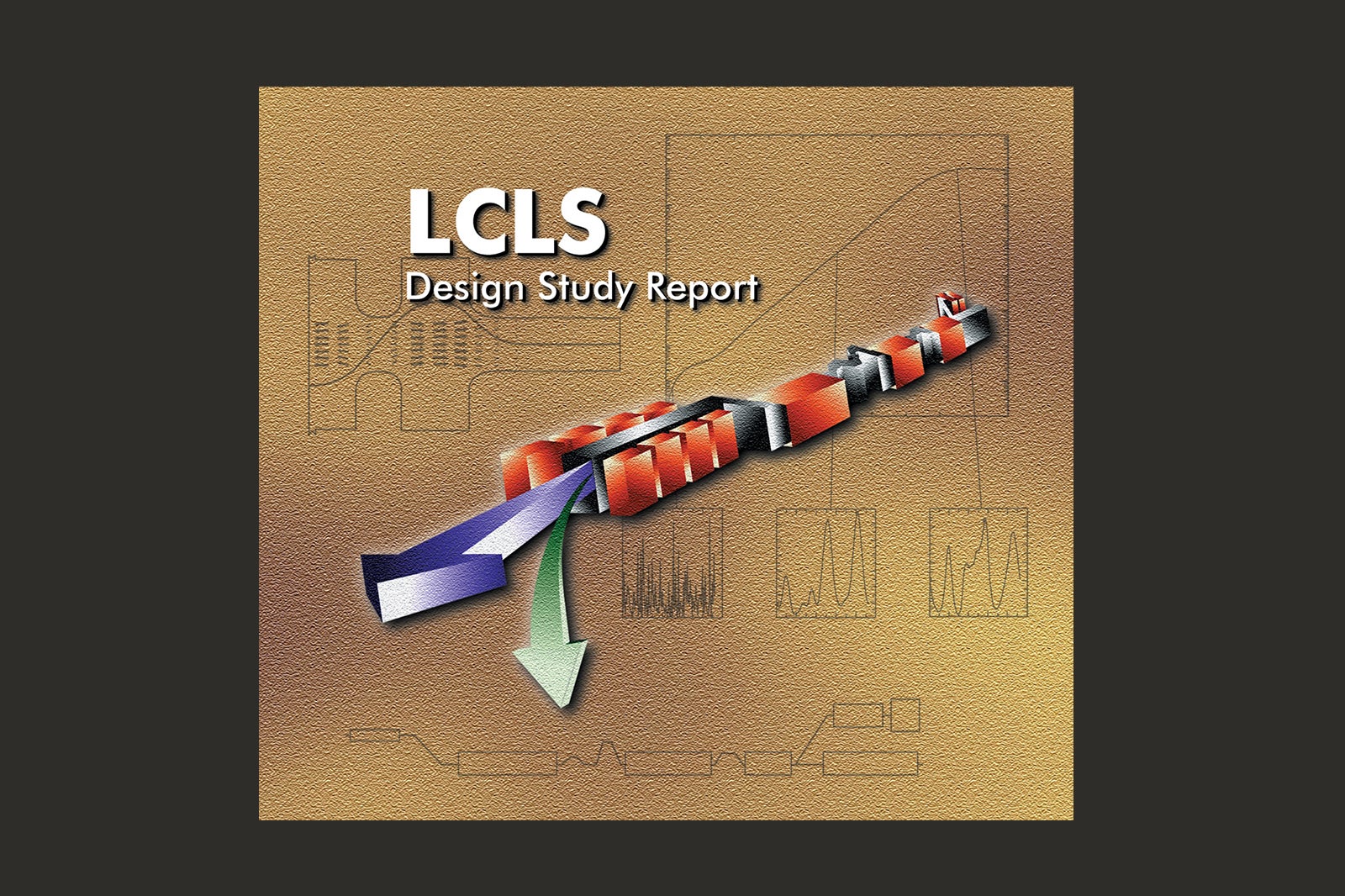
A visualization of the LCLS design from a 1998 design study report
Pellegrini’s proposal received mixed reactions at the 1992 workshop and in the X-ray community. While there was interest, a number of people thought the idea would never work or it would be technically too challenging to implement. However, by 1998, Pellegrini and colleagues had succeeded in demonstrating the validity of the FEL SASE theory in the two key experiments described earlier (third image in this series). The final compelling demonstration experiment, a collaboration between SLAC, UCLA, and Brookhaven and Lawrence Livermore National Labs, followed within a few years, showing saturation of the FEL amplifier. By that time demonstrations had also been done at Argonne National Lab and at the German research center DESY. With the experimental proof-of-principle established, the Department of Energy began funding the construction of the LCLS XFEL in 2001. The graphic shown here is the cover art for a design study report, released in 1998, for the LCLS proposal that defined engineering parameters and their feasibility. (Terry Anderson/SLAC National Accelerator Laboratory)
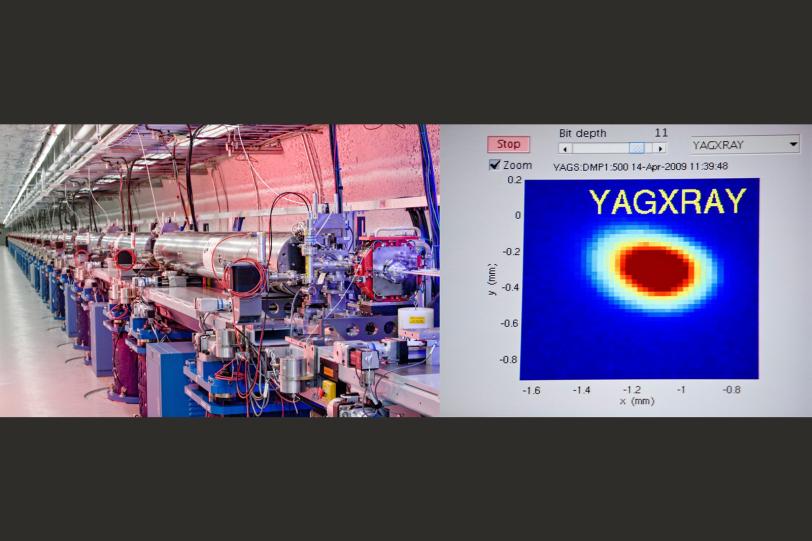
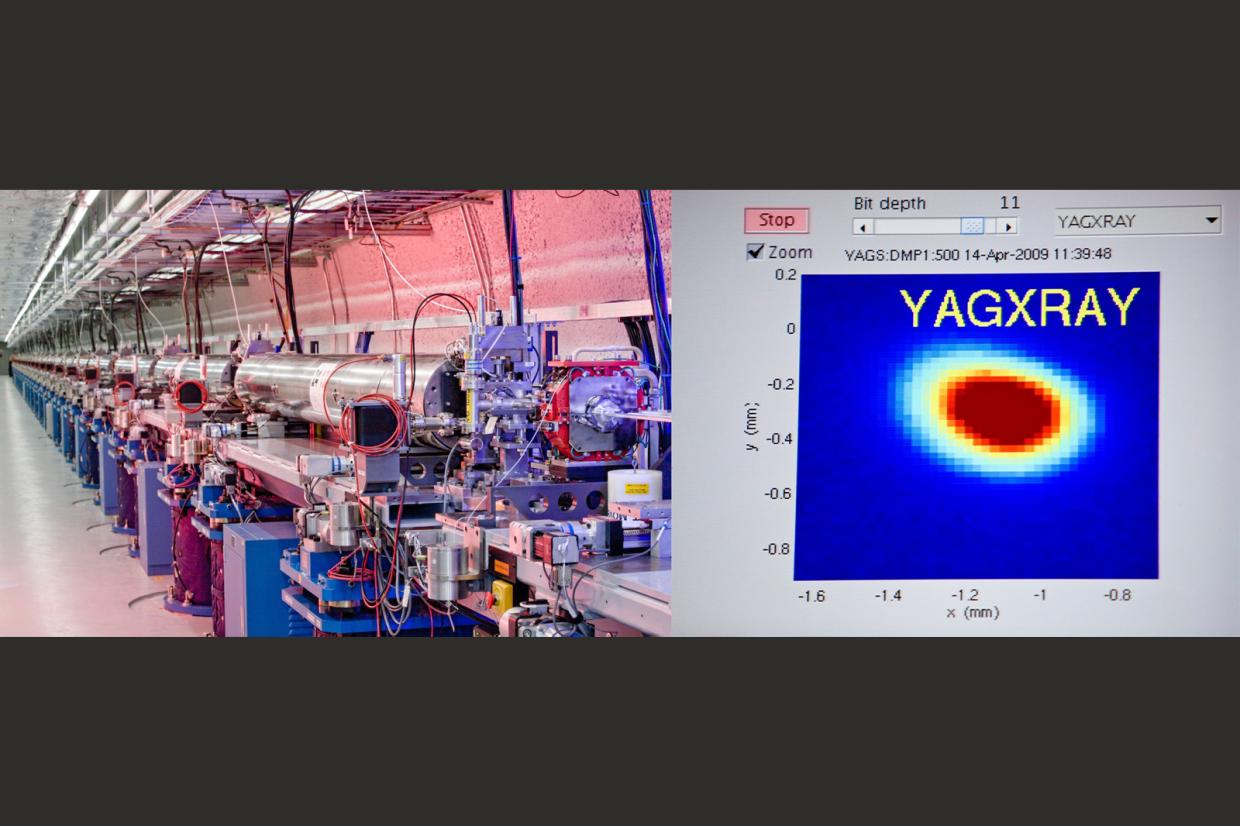
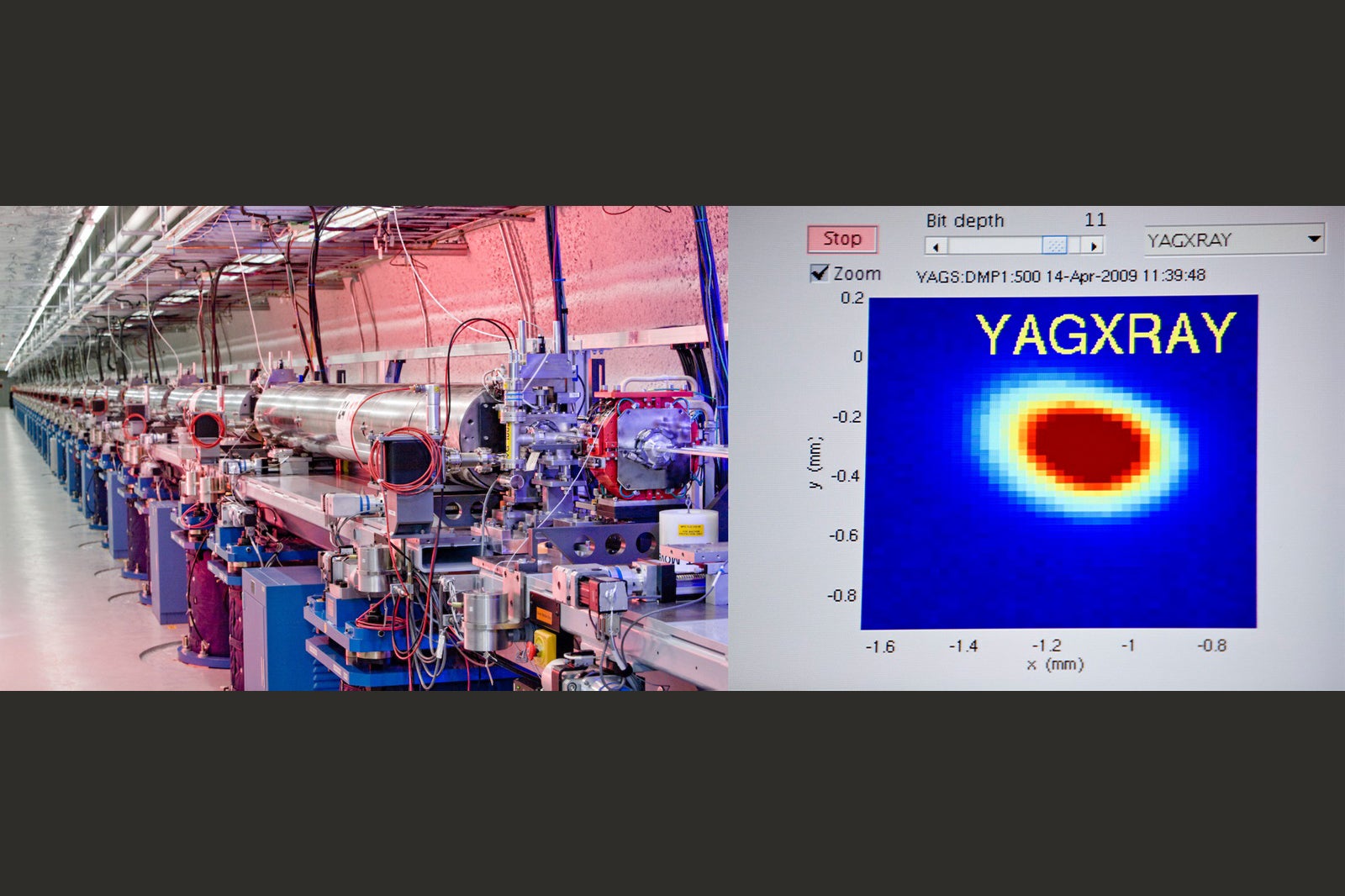
A long gray tube in a laboratory tunnel (left) and a red and blue brightness map of an X-ray beam (right).
In 2009 – 25 years after Pellegrini and collaborators had developed their wavelength-independent theory for a high-gain FEL – SLAC turned on LCLS, the world’s first XFEL producing high-energy (“hard”) X-rays. A few years earlier, researchers at the German research center DESY had fired up FLASH, the first XFEL producing low-energy (“soft”) X-rays.  LCLS opened the door to doing science in a completely new way. It provided researchers with a powerful tool to study processes in atomic detail that happen on the extremely fast time scale of millionths of a billionth of a second. At left: the 100-meter-long string of undulators of the original LCLS. At right: screenshot of “first light” produced by LCLS on April 19, 2009. (Brad Plummer/SLAC National Accelerator Laboratory)
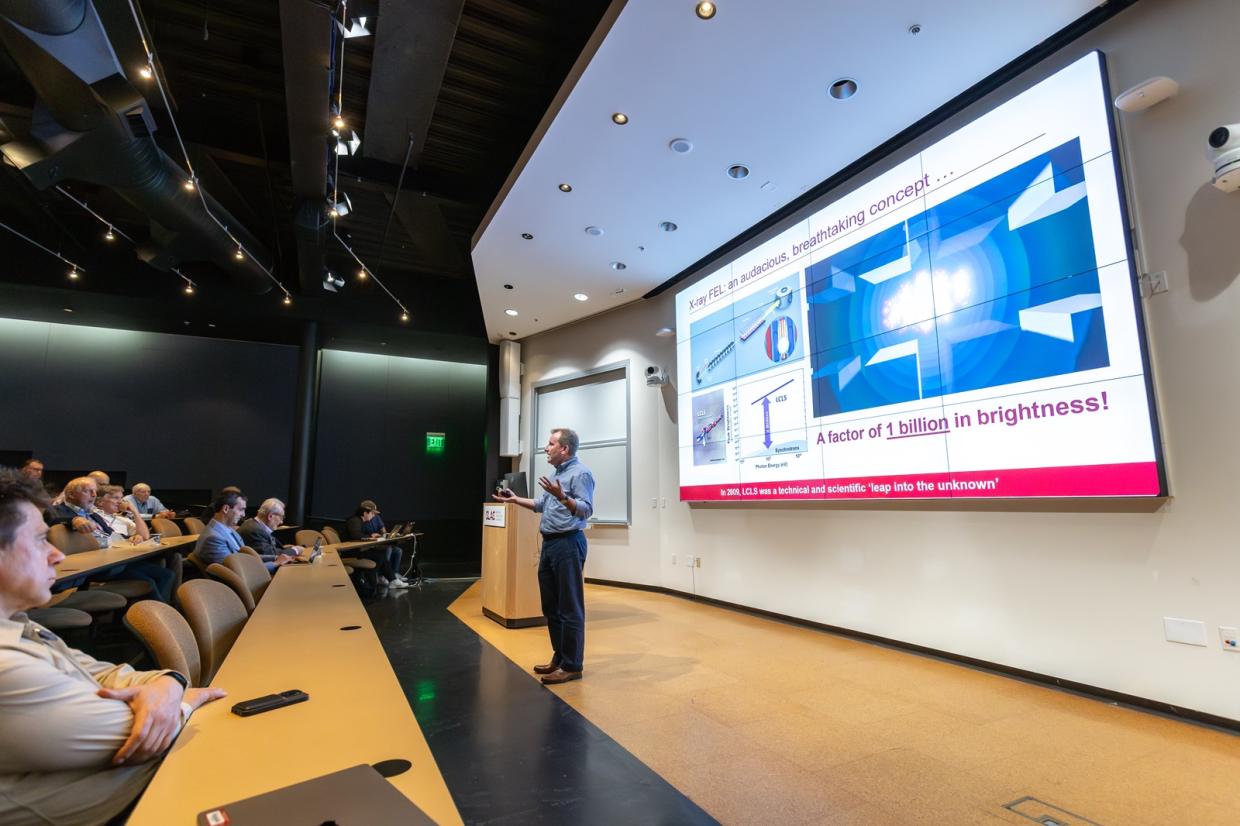
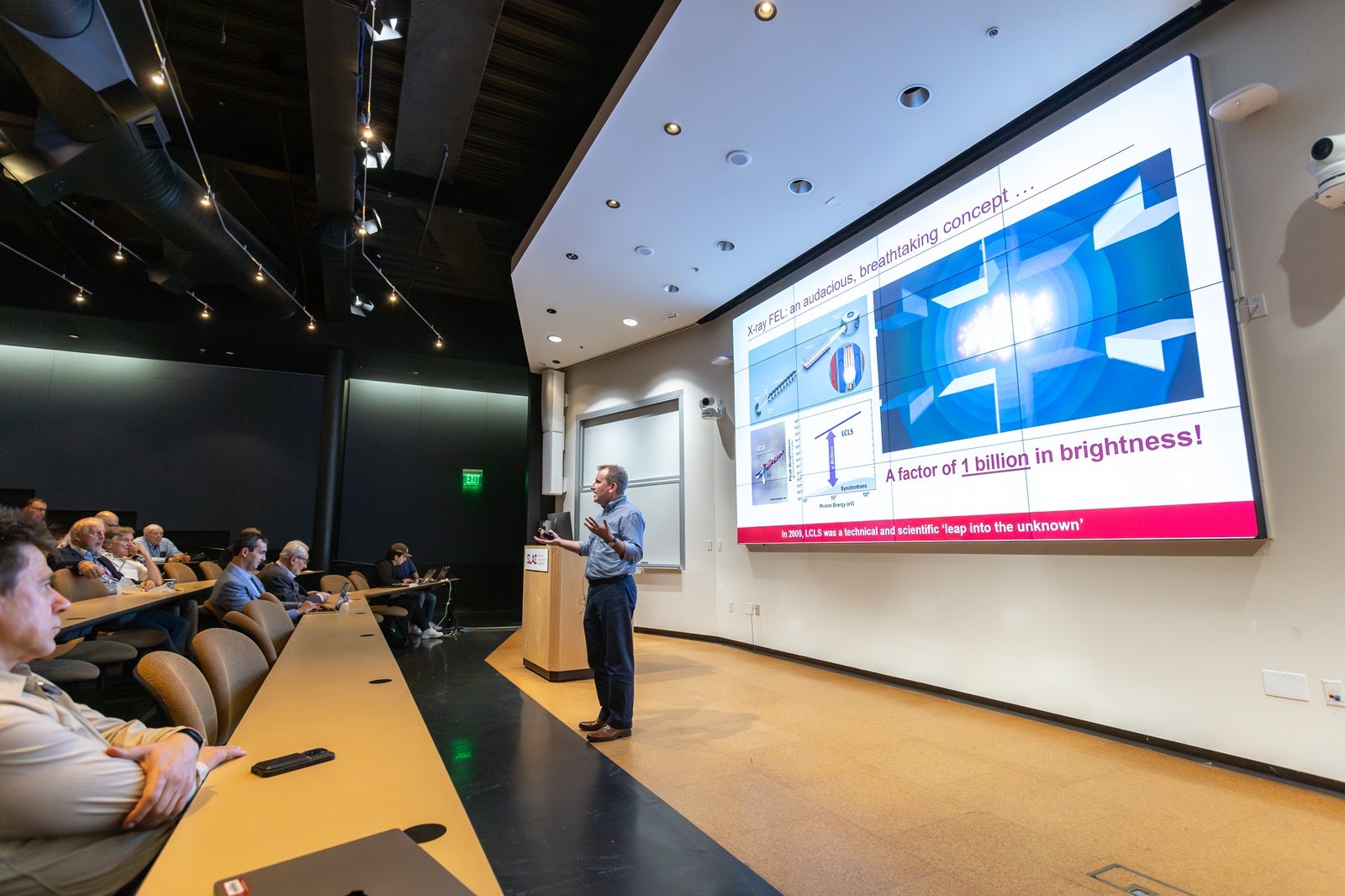
A presenter speaks in an auditorium.
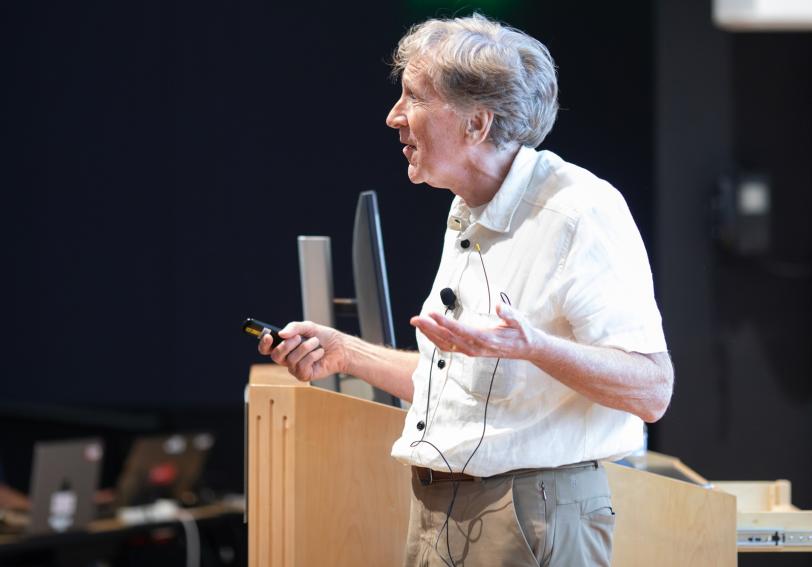
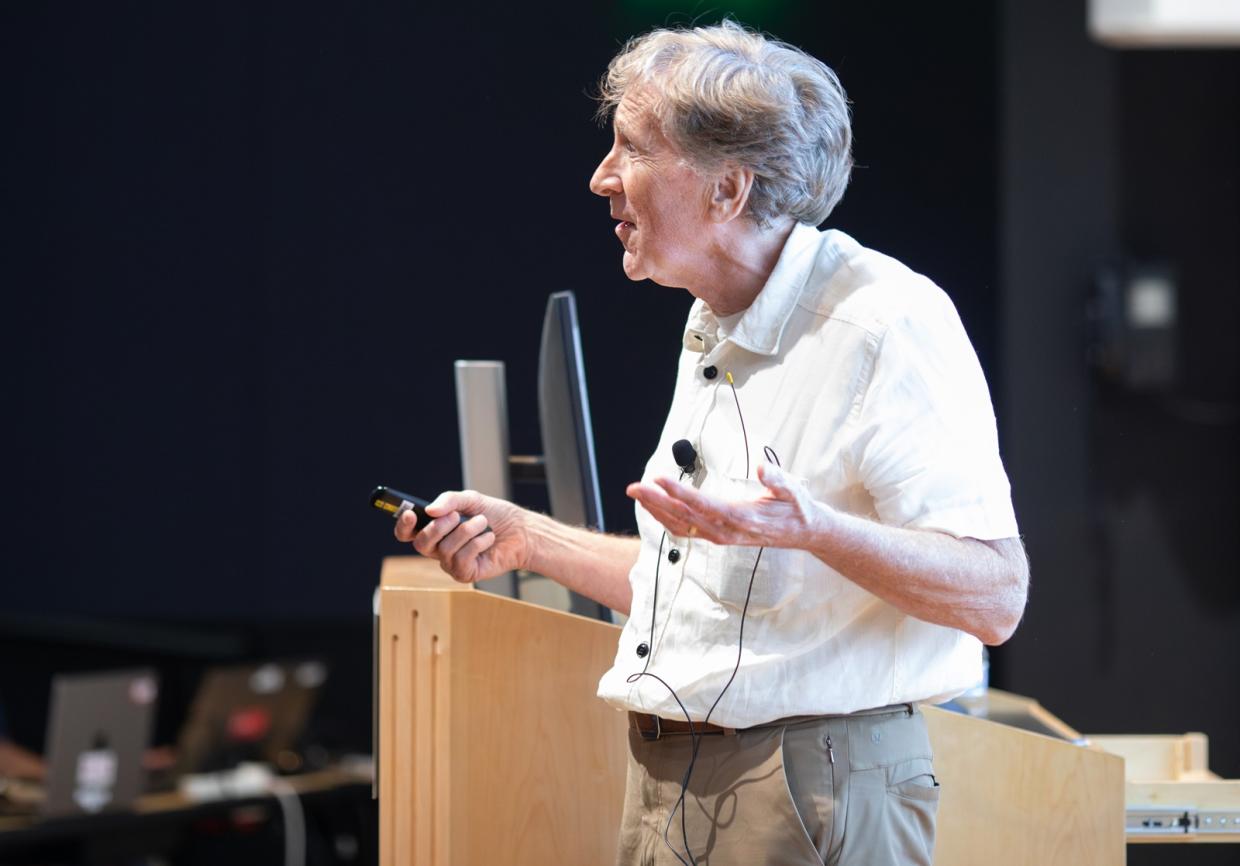
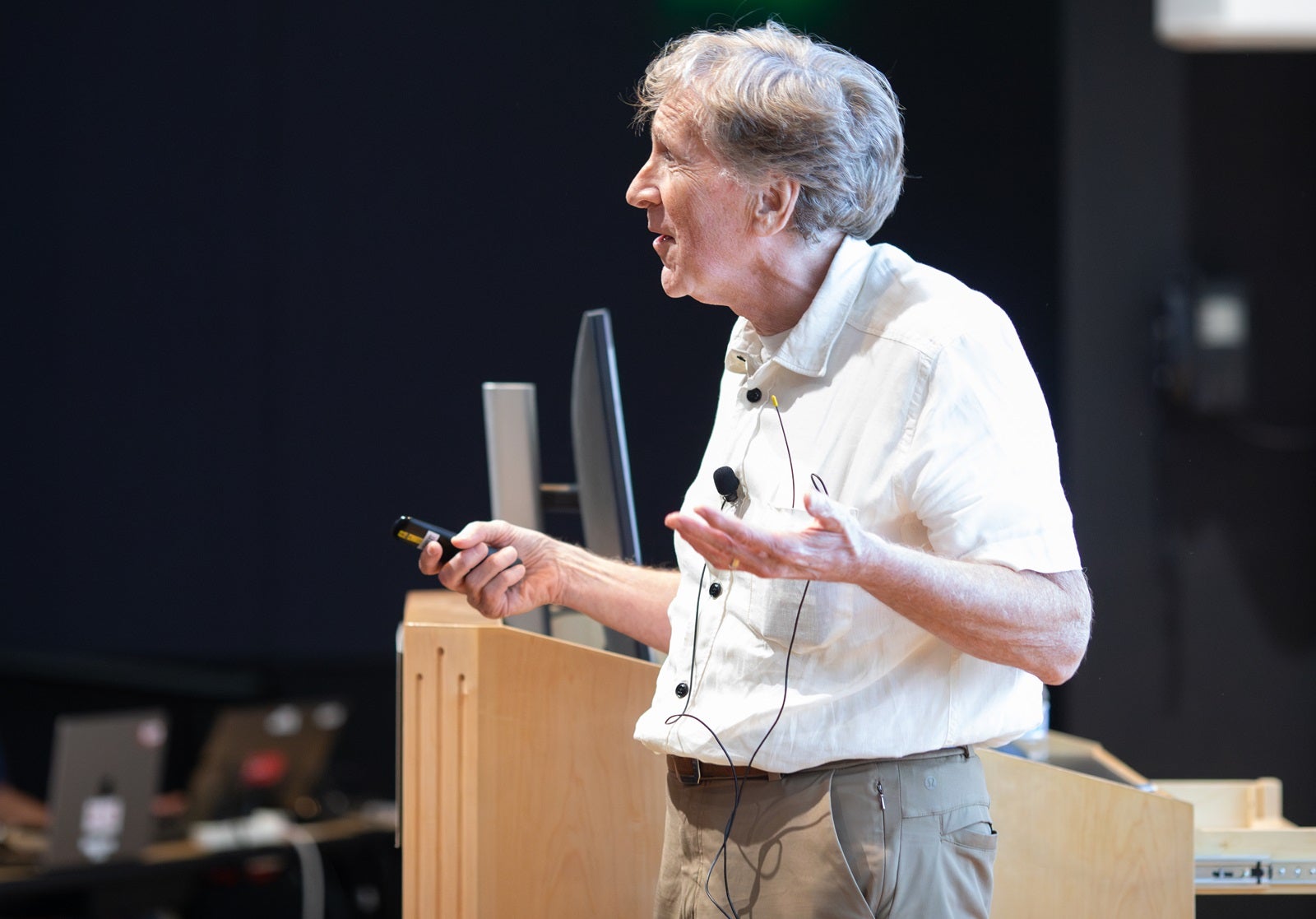
On May 9, 2025 – Pellegrini’s 90th birthday – SLAC celebrated the inventor of the lab’s XFEL with a symposium in his honor. Addressing the 150 attendees, including many leaders in accelerator and XFEL science, LCLS Director Mike Dunne said, “LCLS would never have been built without Claudio’s vision and expertise, and today X-ray free-electron lasers are driving a scientific revolution.” Dunne then shared congratulatory messages from XFEL facilities around the world. SLAC Director John Sarrao (not shown) thanked Pellegrini in his remarks. “SLAC is a different and special place because of Claudio. He continues to be a source of inspiration for us,” Sarrao said. (Jacqueline Ramseyer Orrell/SLAC National Accelerator Laboratory)
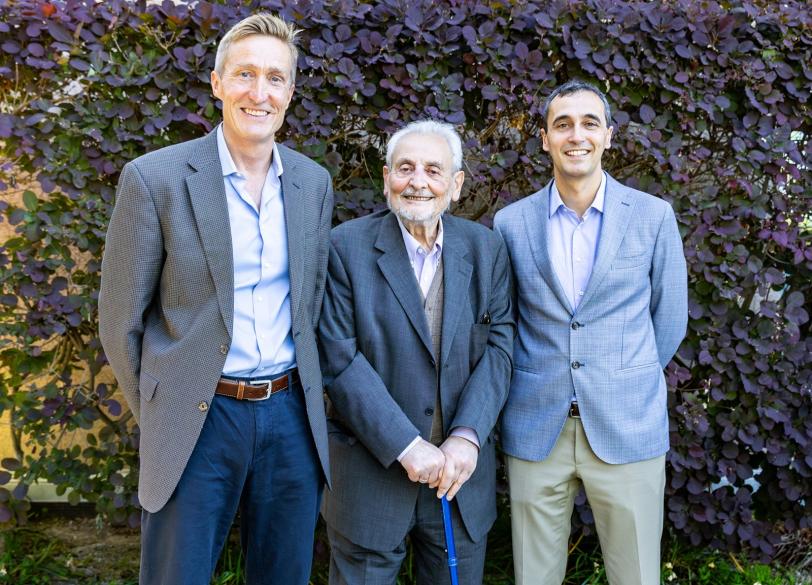
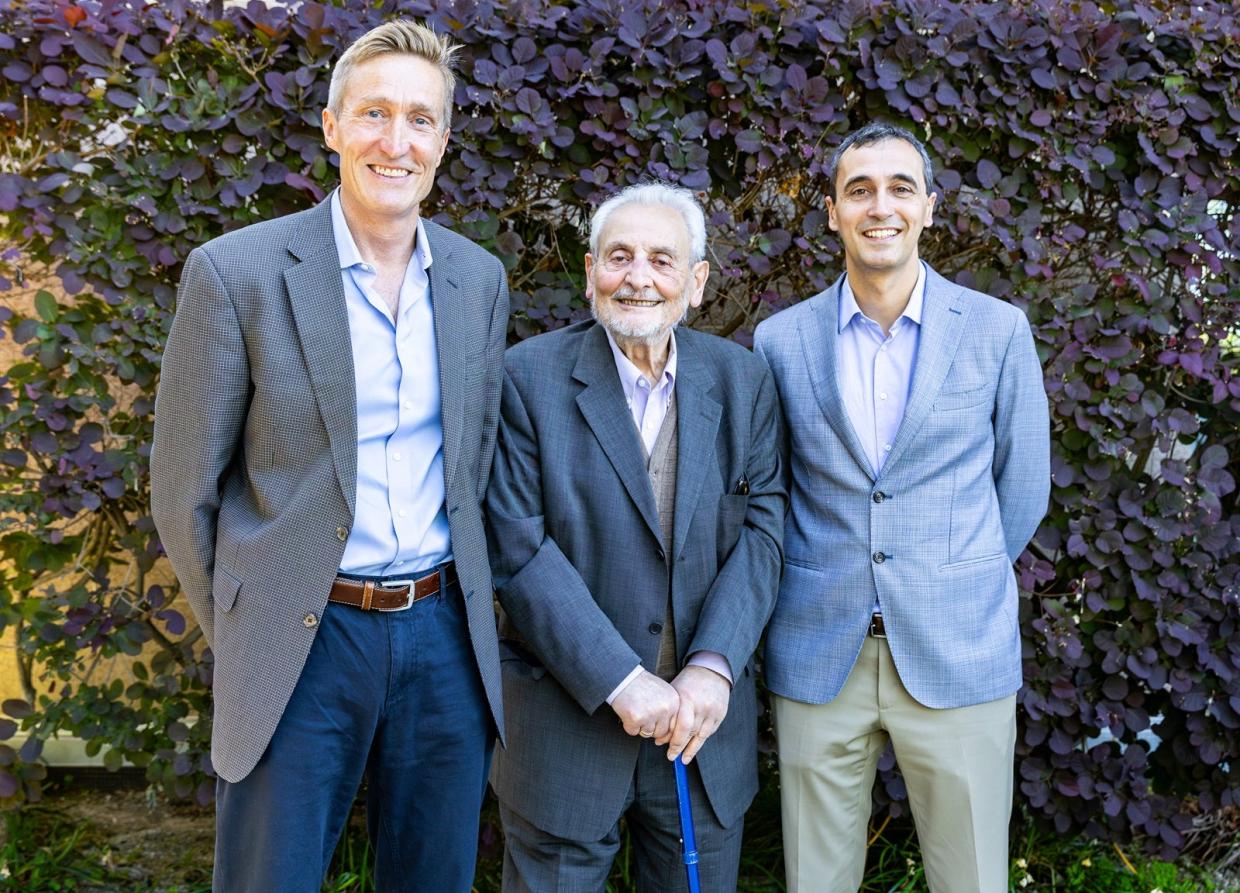
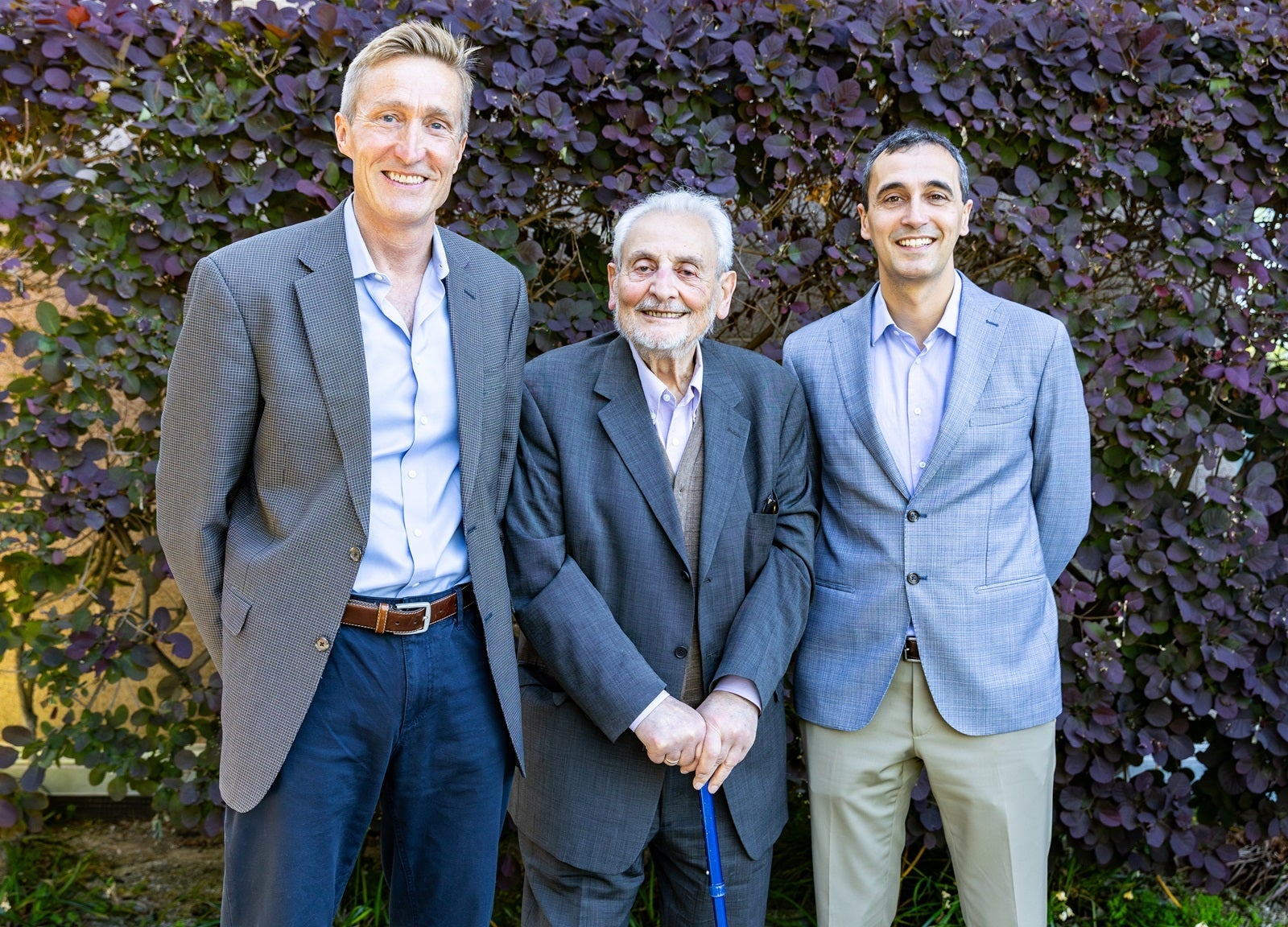
Mark Hogan, Claudio Pellegrini and Agostino Marinelli.
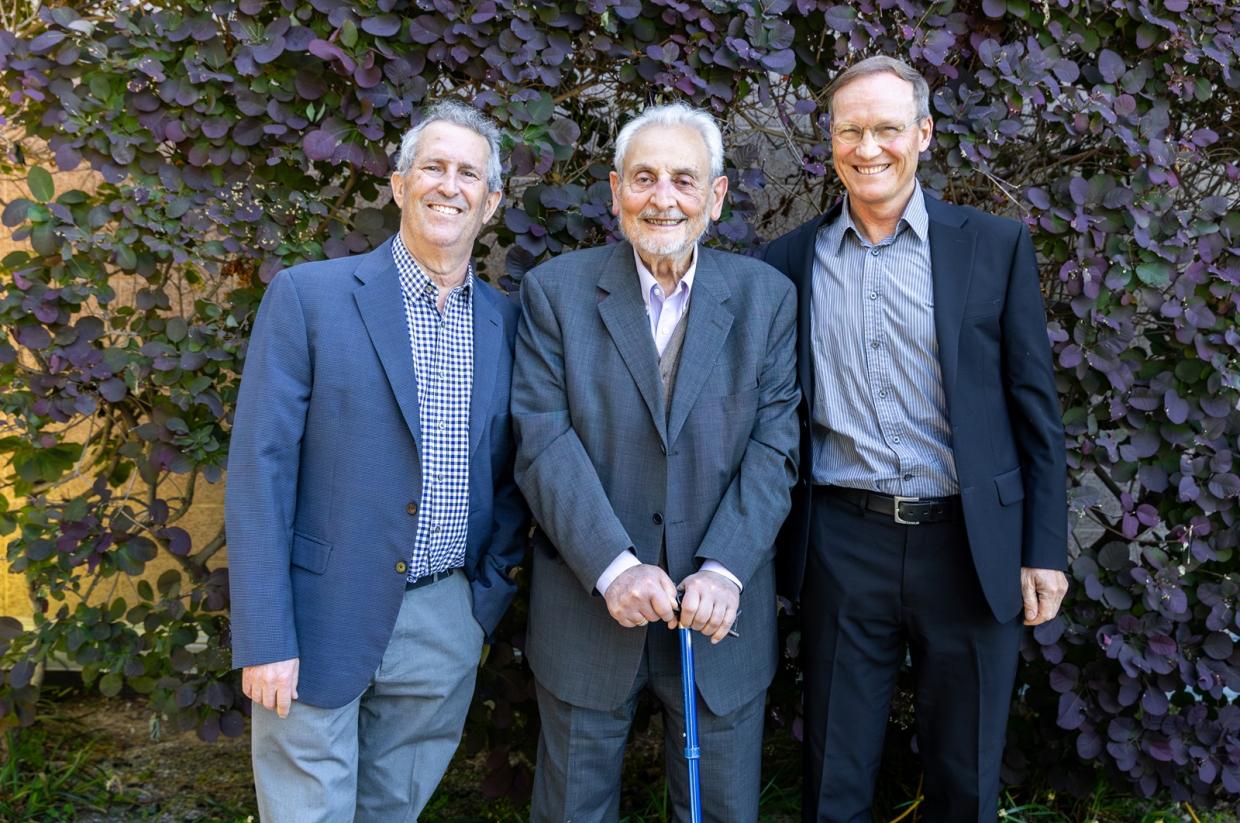
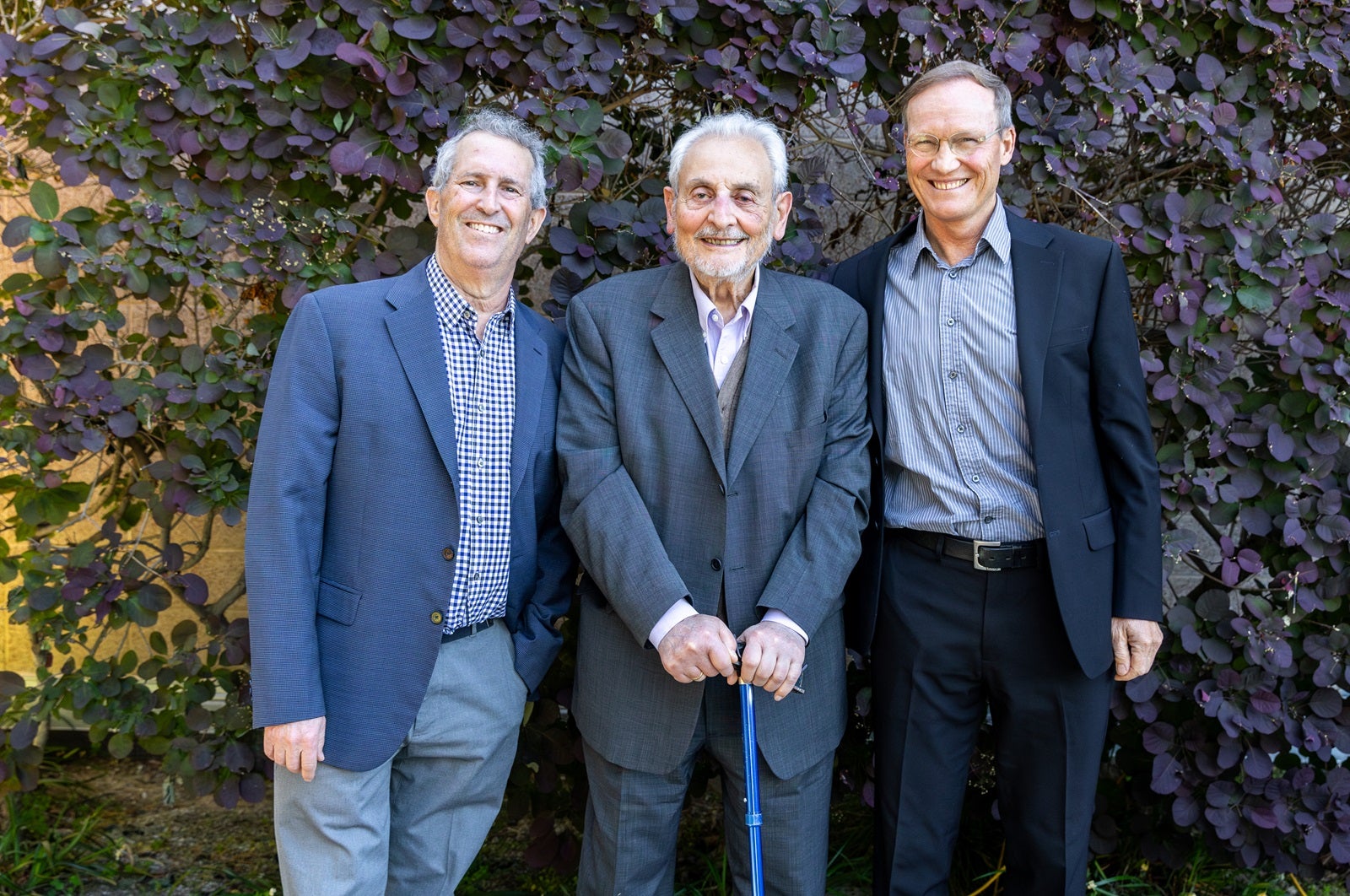
Claudio Pellegrini with Mark Hogan (at left) and Agostino Marinelli (at right), who both met Pellegrini when they were graduate students at UCLA. Hogan worked directly with Pellegrini as PhD supervisor while Marinelli did his PhD thesis work in James Rosenzweig’s group. Hogan, who is now the director of SLAC’s Facility for Advanced Accelerator Experimental Tests II (FACET-II), remembered his time at UCLA: “We were inventing and learning things we’re now pretty much taking for granted, and I loved it. I’m profoundly grateful to Claudio, who was always a sage and mentor to me.” Marinelli, assistant professor of photon science and of particle physics and astrophysics at SLAC, called Pellegrini a wonderful mentor and a very dear friend – to himself and his family. “Claudio taught me not to be afraid of being too ambitious and to work on important problems. He taught me to think about the big picture and how technological developments can drive scientific discovery. Finally, he taught me the importance of being a good mentor and giving students a front seat to the amazing science happening at SLAC,” Marinelli said. (Jacqueline Ramseyer Orrell/SLAC National Accelerator Laboratory)
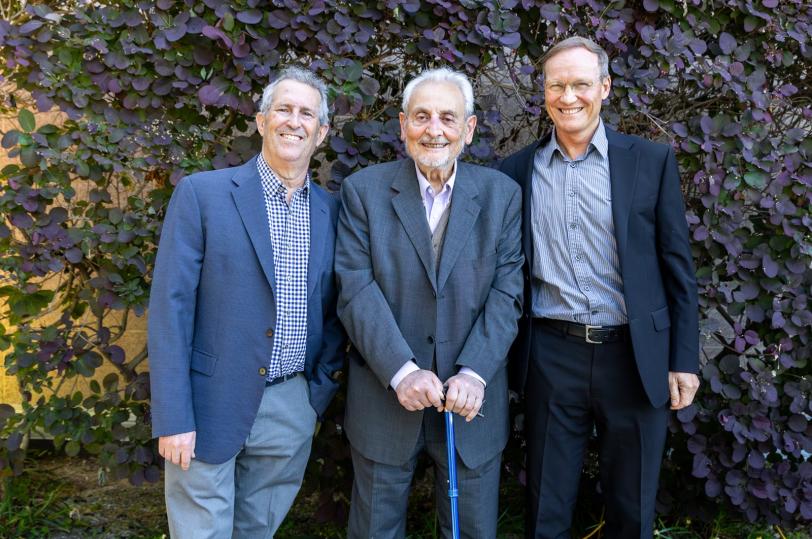
James Rosenzweig, Claudio Pellegrini and Uwe Bergmann.
From left: James Rosenzweig, distinguished professor of physics at UCLA; Claudio Pellegrini; Uwe Bergmann, Martin L. Perl Endowed Professor of ultrafast X-ray science at the University of Wisconsin, Madison. Bergmann, who organized the symposium and was the LCLS deputy director from 2009 to 2013, said, “Claudio is not only a theorist. From the beginning, he was closely involved in the practical and experimental aspects of FELs, and that makes a big difference.” In recent years, Bergmann and Pellegrini have begun to increasingly collaborate, including on projects that could shape the future of XFELs.   Rosenzweig, who joined Pellegrini at UCLA as an assistant professor just when the SASE experiments were initiated, told the audience about “the great adventure of the proof-of-principle campaign that validated the SASE FEL concept” and paved the way for LCLS construction. (Jacqueline Ramseyer Orrell/SLAC National Accelerator Laboratory)
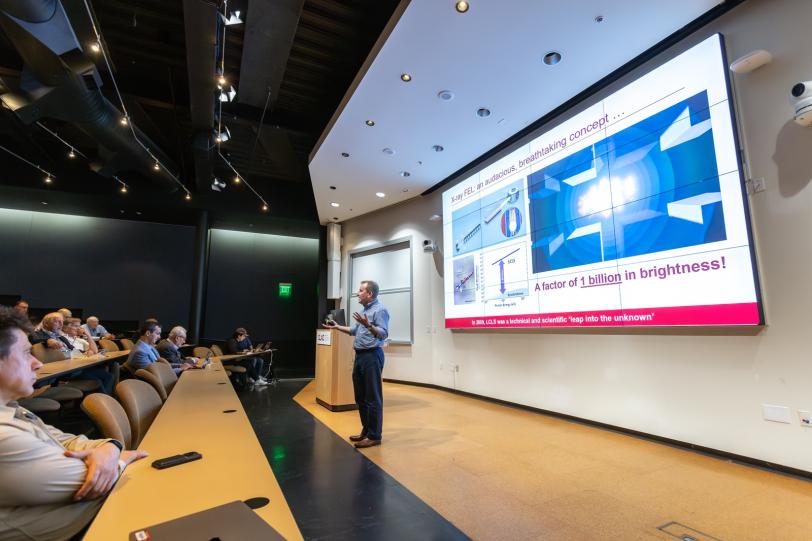
Joachim Stöhr speaks in an auditorium.
The symposium concluded with a talk by Professor Emeritus Joachim Stöhr, first director of LCLS from 2009 to 2013. “I think it’s time for the first X-ray free-electron laser Nobel Prize in Physics,” he said, arguing that Pellegrini and DESY researcher Evgeny Saldin would be strong contenders for such a prize. Both are pioneers who took Madey’s FEL concept and extended it into the X-ray regime, Stöhr said, and both stuck with it and helped turn their ideas into actual facilities – Pellegrini with LCLS at SLAC and Saldin with FLASH at DESY. (Jacqueline Ramseyer Orrell/SLAC National Accelerator Laboratory)

When LCLS came online, it was a revolutionary new facility. With its unprecedented flashes of X-ray light that each only last a few millionths of a billionth of a second and are a billion times brighter than those produced by any previous source, researchers could now do science they could only dream of before. For example, LCLS allowed them to take snapshots of atoms and molecules at work and string them together in molecular movies that reveal chemical reactions and other fundamental ultrafast processes in real time in materials, technology and living things.  

While the goal behind Pellegrini’s proposal was clear from the beginning, it was also apparent that turning it into a working machine would be an extraordinary technological challenge. “It didn’t seem to be impossible, but we certainly needed to do our homework,” Pellegrini remembers. “It took a place like SLAC with its technical capabilities and the collective effort of many talented people in many places to make it happen.” 

Since 2009, similar light sources have been developed around the world. Meanwhile, at SLAC, recent and future upgrades to LCLS ensure that its capabilities keep defining and pushing the frontiers of X-ray science and technology.

The symposium was organized by Uwe Bergmann, Martin L. Perl Endowed Professor of ultrafast X-ray science at the University of Wisconsin, Madison, together with LCLS’s Leilani Conradson, Samira Morton and Brandon Tan.

Claudio Pellegrini's 90th Birthday Celebration at SLAC


Further Information

LCLS, SSRL and FACET-II are DOE Office of Science user facilities.

For questions or comments, contact SLAC Strategic Communications & External Affairs at communications@slac.stanford.edu.


About SLAC

SLAC National Accelerator Laboratory explores how the universe works at the biggest, smallest and fastest scales and invents powerful tools used by researchers around the globe. As world leaders in ultrafast science and bold explorers of the physics of the universe, we forge new ground in understanding our origins and building a healthier and more sustainable future. Our discovery and innovation help develop new materials and chemical processes and open unprecedented views of the cosmos and life’s most delicate machinery. Building on more than 60 years of visionary research, we help shape the future by advancing areas such as quantum technology, scientific computing and the development of next-generation accelerators.

SLAC is operated by Stanford University for the U.S. Department of Energy’s Office of Science. The Office of Science is the single largest supporter of basic research in the physical sciences in the United States and is working to address some of the most pressing challenges of our time.

Dig Deeper

Related stories

Feature

Derek Mendez and Xueli “Sherry” Zheng aim to accelerate drug discovery and improve energy storage.

Man and woman
Feature

Salleo sees strength in the big picture and minute details of the people, tools and partnerships at SLAC.

Portrait of Alberto Salleo
Feature

Researchers at SLAC are developing experimental techniques to evaluate new candidates for inertial fusion energy targets. 

a graphic in the style of graphic novel depicts four lasers converging on a spherical target, which represents an inertial fusion energy reaction
Feature

Derek Mendez and Xueli “Sherry” Zheng aim to accelerate drug discovery and improve energy storage.

Man and woman
Feature

Salleo sees strength in the big picture and minute details of the people, tools and partnerships at SLAC.

Portrait of Alberto Salleo
Feature

Researchers at SLAC are developing experimental techniques to evaluate new candidates for inertial fusion energy targets. 

a graphic in the style of graphic novel depicts four lasers converging on a spherical target, which represents an inertial fusion energy reaction
News Brief

He was honored for his work in ultrafast physics.

Portrait of Shambhu Ghimire
Multimedia

On Monday, scientists and engineers reacted to the first images from the NSF–DOE Vera C. Rubin Observatory, marking a historic milestone.

Scientists reacting to presentation
Feature

Shweta Saraf and her team work to ensure the LCLS beamline runs without interruption. 

A woman stands next to a large blue server rack filled with electronic control units, wiring, and monitoring equipment. She is smiling at the camera while using a stylus to interact with a touchscreen interface on one of the devices.